Screaming Reels Seychelles
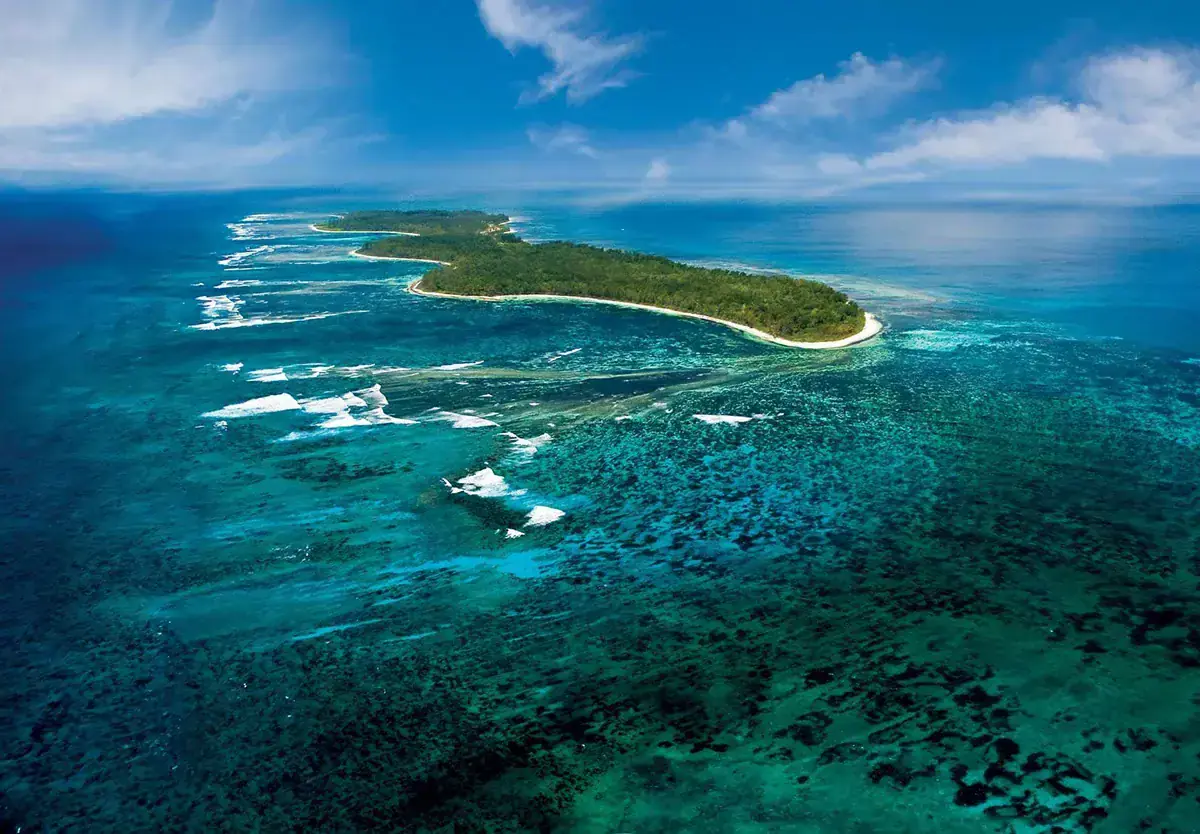
Aerial view of a remote Seychelles atoll ringed by coral reef

Home/Destinations

Destinations

Wild ecosystems, not pins on a map.

We don't send you to crowded charter grounds. Each destination has its own character, its own seasonal rhythm and its own brand of fight.

African Banks in the northern Amirantes, Seychelles
Peak October – May

African Banks

At the far northern edge of the Amirantes, shallow reef rises abruptly from deep Indian Ocean water. The area is charged with current, bait and life, and predator activity is rarely subtle.

Days often begin with yellowfin boiling on the surface and end with the unmistakable thump of a dogtooth crushing a jig at sunset.

  • Yellowfin tuna 20–80+ kg, frequently on the surface
  • Dogtooth tuna 20–70+ kg, deep along the drop-offs
  • GTs, wahoo 20–40 kg, sailfish and amberjack
  • Popping at sunrise, jigging as the sun rises, stickbaits under birds
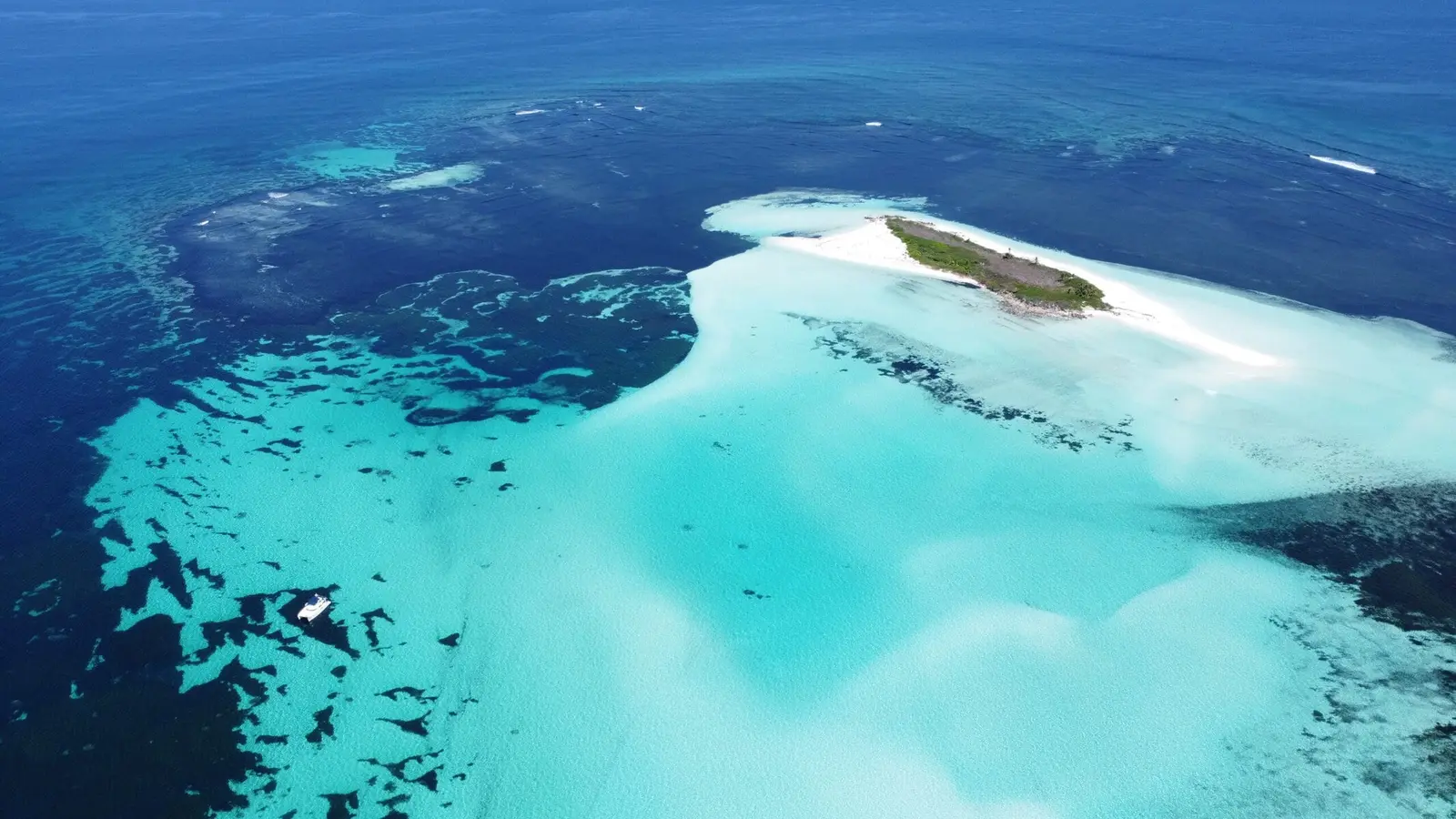
Poivre Atoll lagoon and sandbank in the Amirantes
Largest fish February – May

Poivre

Near-mythical among Indian Ocean anglers, and defined by raw power rather than numbers. At the heart of Poivre's reputation lies "The Kennels" — a section of reef where dogtooth stage in ambush.

Fights here are not long or forgiving. They are brutal, technical and decisive, often exposing weaknesses in tackle and technique within seconds.

  • Dogtooth tuna 30–70+ kg — the defining species
  • GTs along reef edges and foam lines
  • Yellowfin, wahoo and amberjack through the channels
  • Heavy jigging, large stickbaits, deep divers along channels

St Joseph Atoll lagoon system in the Seychelles Outer Islands
Peak October – May

St Joseph

One of the largest atolls in the Outer Islands. A vast protected lagoon sits inside productive outer reef walls, so radically different fishing environments exist side by side.

In a single day you can move from cruising GTs inside the lagoon to dogtooth positioned in ambush just outside the passes.

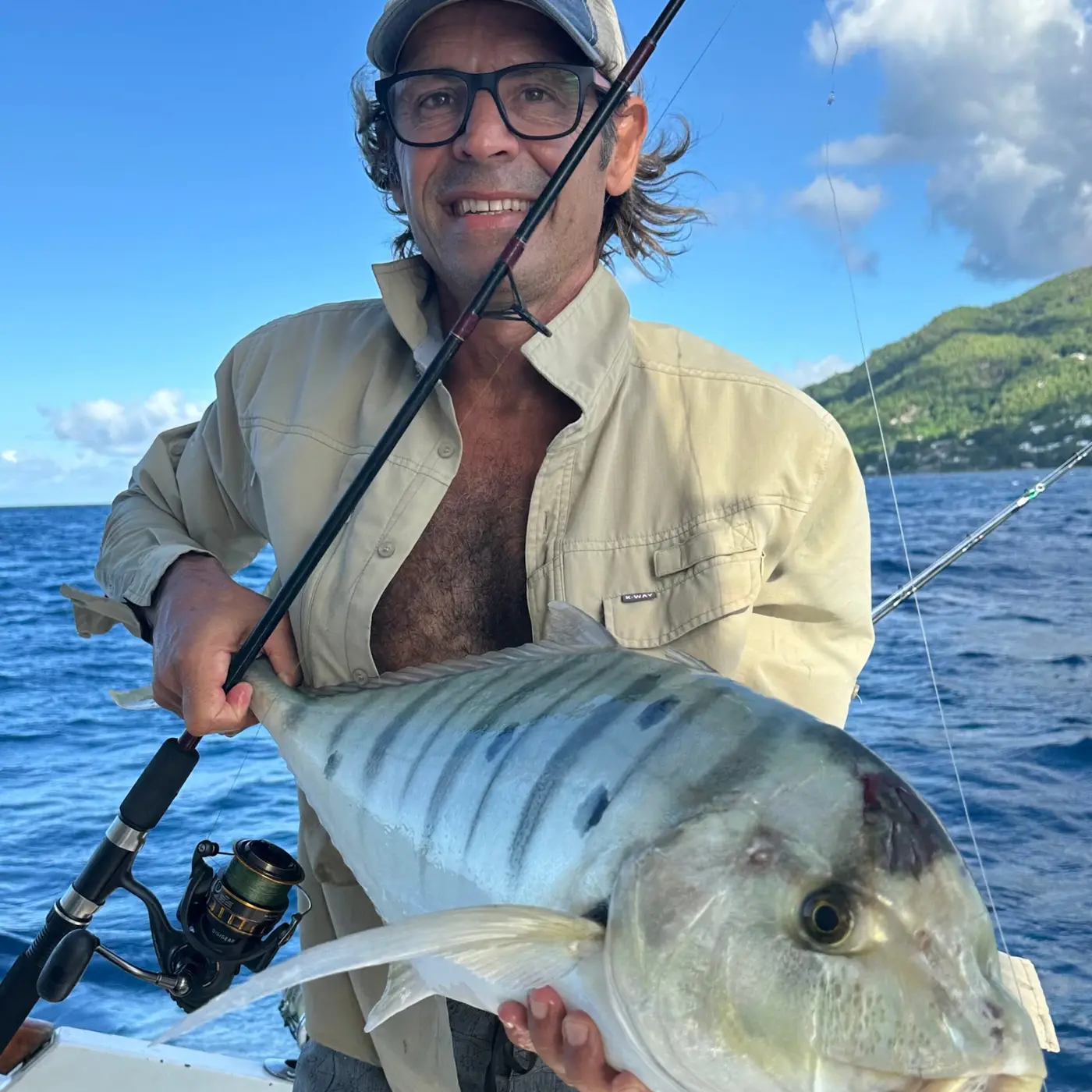
  • Giant trevally 20–40+ kg inside the lagoon and along the edges
  • Bluefin trevally abundant on the flats
  • Dogtooth holding deep outside the passes
  • Topwater on lagoon edges, stickbaits through channels, jigging outer drops

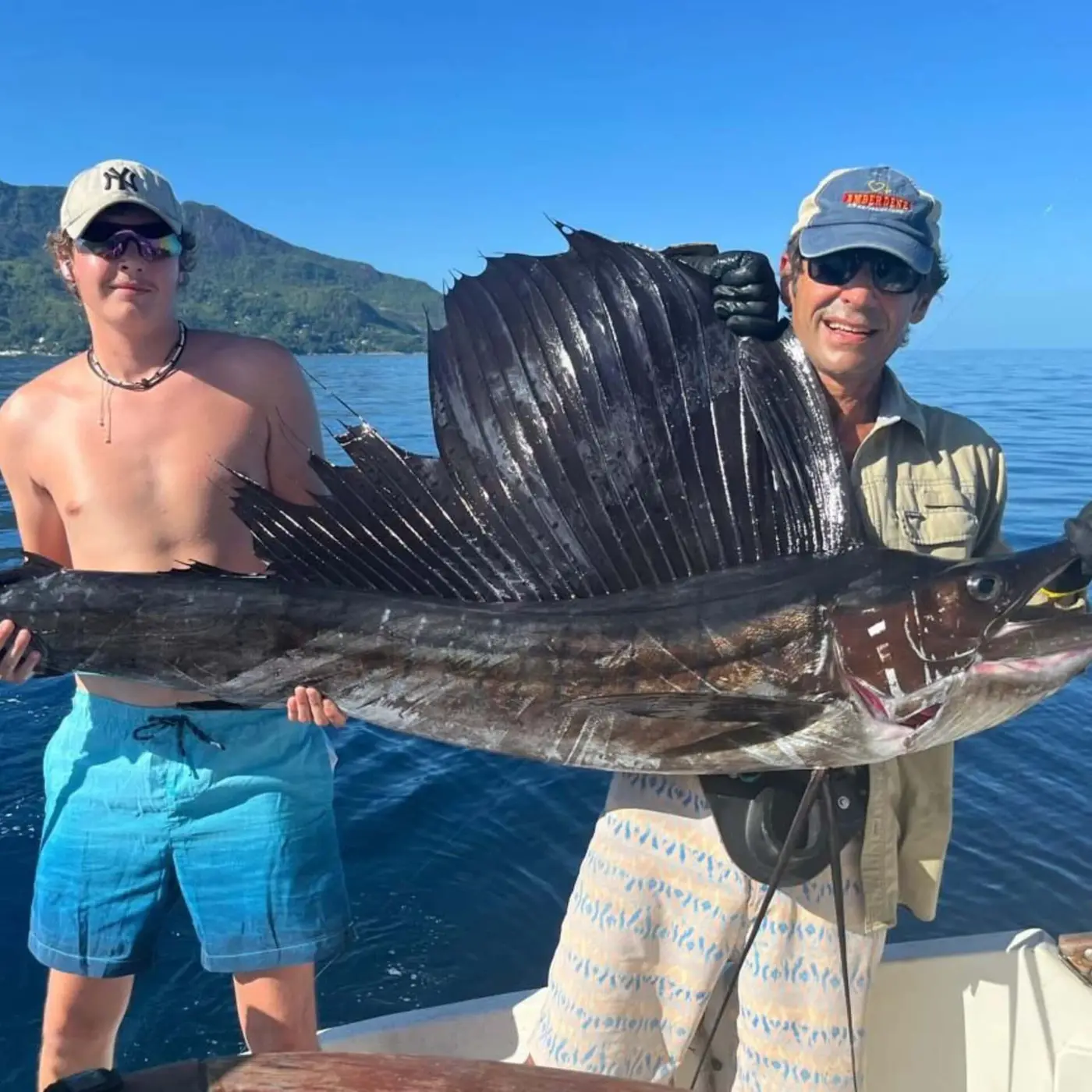
Anglers with a sailfish near Alphonse in the Seychelles
Sailfish Nov–Dec & Feb–Mar

Alphonse

Globally recognised for its flats and fly fishing pedigree, but beyond the lagoon lies a bluewater fishery that consistently surprises seasoned offshore anglers.

Steep drop-offs around Alphonse and St François mean pelagics patrol close to structure. Anglers are rarely searching blindly — fish are where the conditions say they should be.

  • Regular sailfish encounters along current lines
  • Yellowfin, wahoo, GTs, dogtooth and seasonal dorado
  • Casting stickbaits at bait balls, trolling clean bluewater, vertical jigging pressure zones

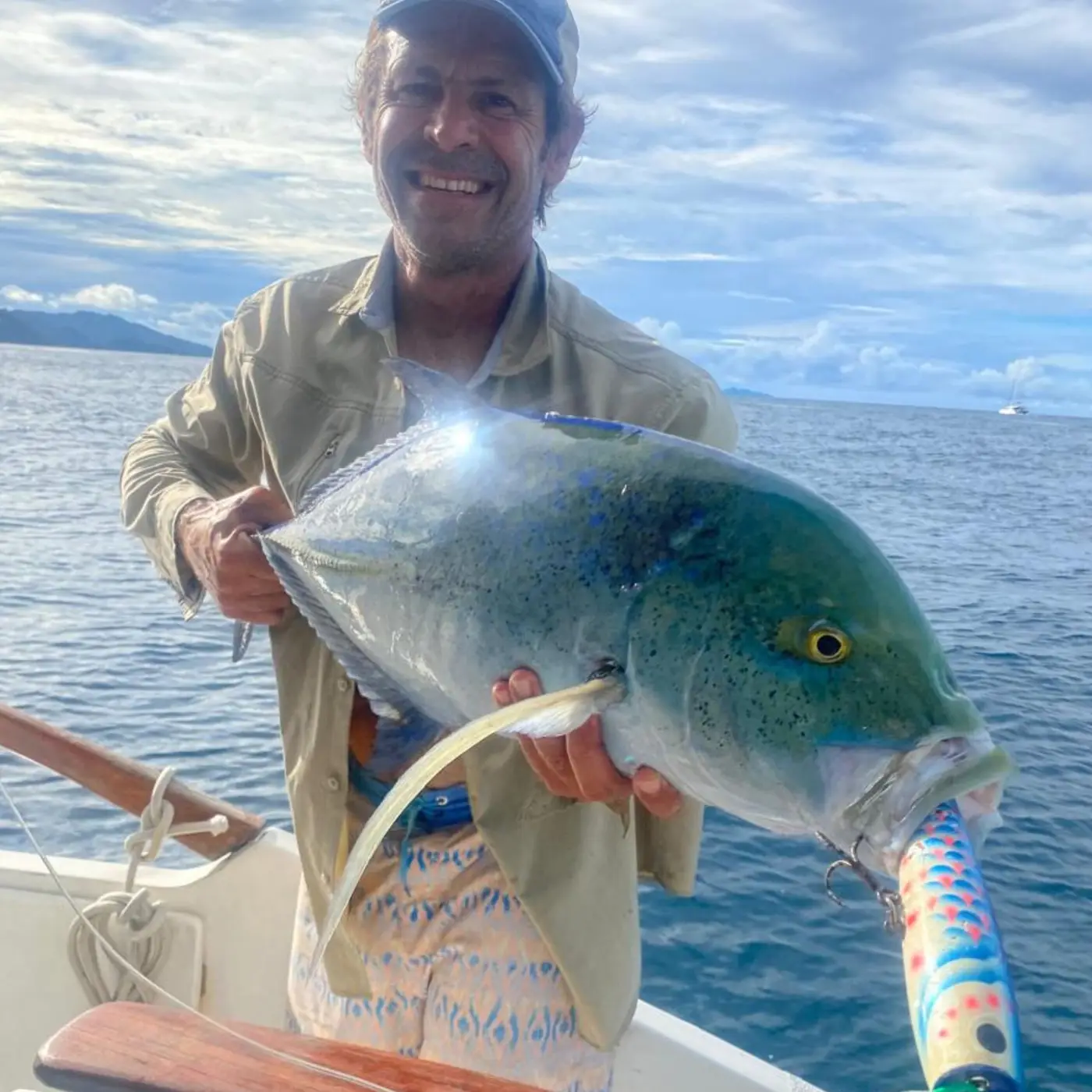
Angler holding a bluefin trevally caught on a stickbait in the Seychelles
Reliable November – May

Desroches

A strategic position in the Amirantes offering a rare balance between productive inshore fishing and legitimate offshore opportunity — you can move from shallow GT sessions to serious bluewater in the same day.

  • GTs and bluefin trevally along shallow reef points and coral edges
  • Wahoo, yellowfin and dogtooth on the offshore contours
  • Sailfish along bluewater lanes, occasional marlin
  • Popping reef points, stickbaits through channels, jigging offshore contours

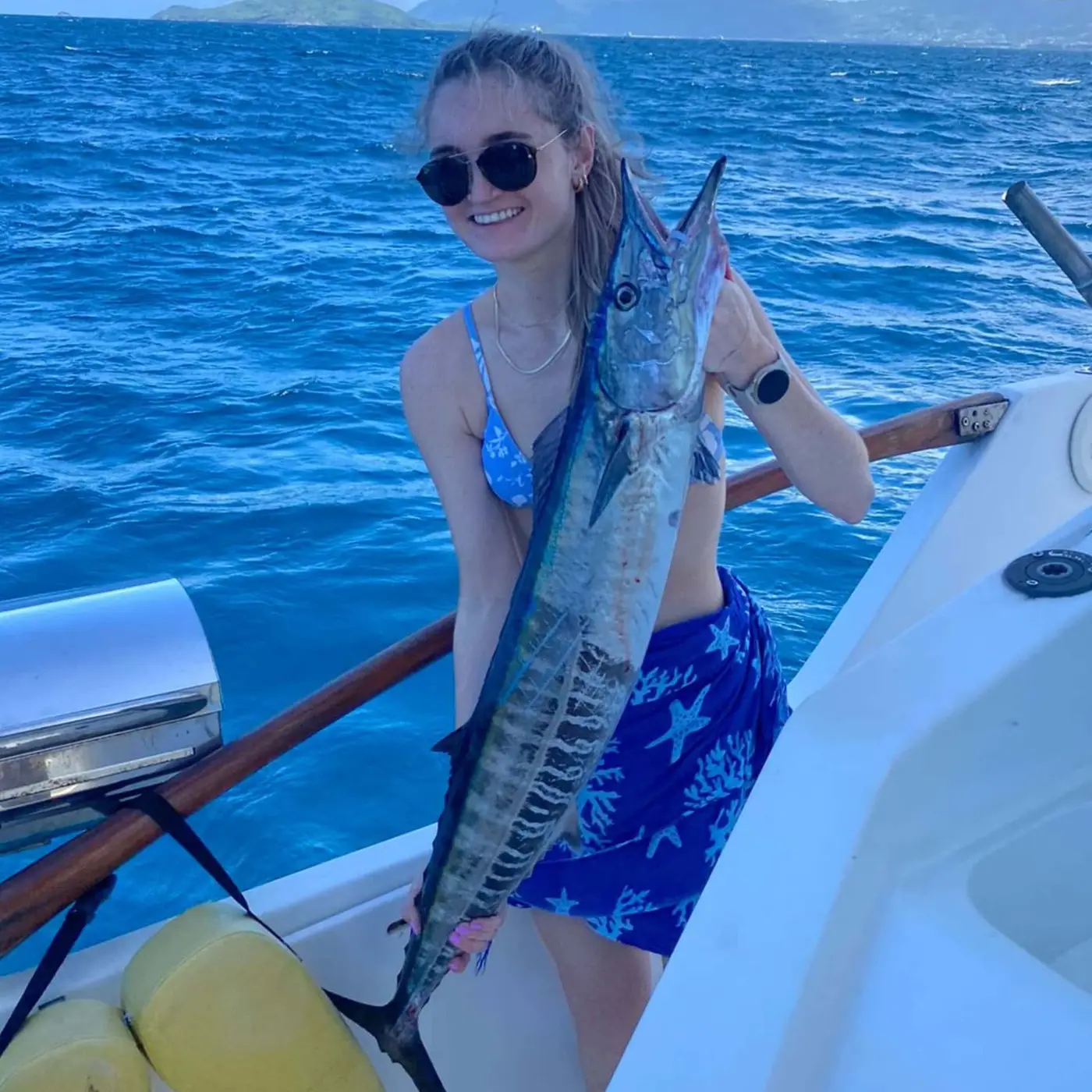
Angler holding a wahoo caught along a current line in the Amirantes
Strongest November – May

Remire

A broad platform where deep bluewater presses hard against reef structure, creating sharp colour changes and constant movement. Remire is shaped by transition — conditions shift quickly and action erupts with little warning.

  • Yellowfin around birds and bait schools
  • Wahoo along fast-moving current lines
  • Sailfish, dorado, GTs, dogtooth and amberjack
  • High-speed trolling, stickbaits into bird activity, jigging 150–300 g

Closer to home

Mahé Drop-Off, Bird & Denis Islands

Not every great fishing destination requires a multi-day expedition.

Mahé Drop-Off

The backbone of inner island fishing, roughly 25–50 nautical miles out. The seabed falls from 30–60 m into 800–1,500 m in a matter of boat lengths, forcing pelagics tight to the contour lines. Dogtooth dominate this zone.

Bird Island

Flat, exposed and surrounded by uninterrupted current. Minimal pressure, exceptionally clean water and highly aggressive predators that feed high in the water column. Missed bites rarely come back around.

Denis Island

The most refined structure in the Inner Islands — sharp edges, clean reef, predictable current seams. Repeatable, pattern-driven fishing where small positioning errors have large consequences.

Next step

Not sure which atolls fit your trip?

The right route depends on your dates, your target species and the conditions. Let's talk it through.

WhatsApp us